
The Next-Generation Single Aisle Will Reshape AAM — Not the Other Way Around
For years, Advanced Air Mobility (AAM) has been positioned as the disruptor of aviation—a clean-sheet revolution that would redefine how we move through cities and beyond. But the narrative is beginning to falter.
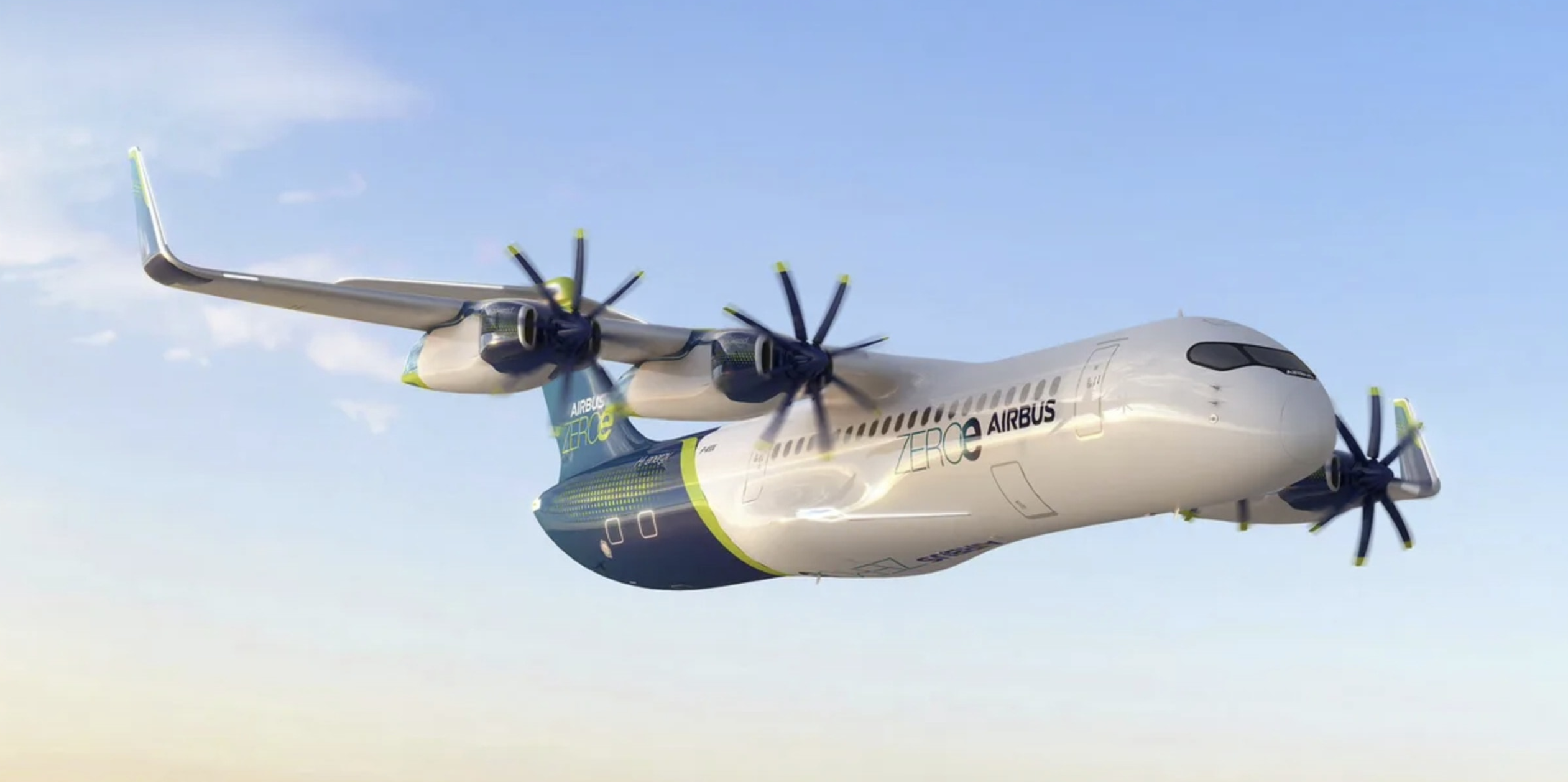
The next-generation single-aisle (NGSA) programs led by Airbus and Boeing are quietly reasserting where real gravity in this industry sits. Not because AAM has failed, but because NGSA operates on a fundamentally different level—scale, capital intensity, and long-term impact. And that shift is starting to reshape AAM itself.
I've been saying this for a while: For Tier 1 / 2 suppliers, AAM was not necessarily about building a new market. It was a playing field. A way for suppliers, engineers, and even OEMs to stay sharp working in a "sexy" environment, experimenting with new technologies, and preparing for what really matters: the next aviation cycle. If AAM turns into a meaningful standalone business, that's upside. But it was never the base case.
The Talent Equation Is Already Moving
AAM attracted some of the best engineering talent in the industry. The appeal was obvious—clean-sheet design, faster decision-making, and compensation models that looked more like Silicon Valley than traditional aerospace. Equity participation, stock options, and above-market salaries made companies like Joby, Archer, and Beta highly competitive employers. For many engineers, this wasn't just another program—it was a career-defining & wealth creating opportunity.
But NGSA changes that dynamic. When Airbus or Boeing launch a new single-aisle platform, it becomes the defining engineering program of a generation. These are multi-decade programs with massive budgets and global impact. They don't just create aircraft, they shape supply chains, technologies, and careers for decades. That creates a pull that AAM may struggles to match.
At the same time, traditional OEMs face a structural disadvantage: they cannot easily compete with startup-style compensation. So, what we are likely to see is not a full migration back, but a fragmentation of talent—engineers moving between AAM and NGSA, optimizing for both financial upside and long-term relevance.
Boeing, Wisk, and the Real Objective
Boeing's positioning around Wisk is another signal of where things are heading. From the outside, Wisk was supposed to be a cornerstone of Boeing's AAM ambitions. But strategically, the value was never limited to building a commercially successful eVTOL operation. The real value sits in what Wisk has been developing: autonomy, flight control architectures, electrification and system-level integration capabilities. In that sense, Wisk is less a business unit and more a technology incubator.
At the same time, Wisk's decision to pursue a fully autonomous aircraft from the outset pushes commercial viability further out. Certification becomes more complex, regulatory hurdles increase, and revenue generation is delayed—likely well into the next decade. While the commercial AAM case stretches out, the technology transfer back into Boeing's core programs becomes the real win.
Embraer's Strategic Dilemma
Embraer sits in a particularly complex position. With Eve, the company has taken a structured and relatively disciplined approach to AAM. At the same time, the long-standing question remains: will Embraer eventually step into the single-aisle market? If that happens, the implications are significant.
Developing a next-generation single-aisle aircraft requires billions in investment, long development timelines, and sustained financial commitment. Running that in parallel with scaling an AAM business is not just challenging, it may be unrealistic for a company like Embraer, which seeks an investor to even test the waters of developing a Single Aisle Aircraft. They certainly have the engineering talent but so did Bombardier and their attempt to attack the Single Aisle market backfired not from an Engineering perspective as the C-Series (now A220) is a beautiful aircraft but almost bankrupt the company.
Which raises a critical point: Embraer may eventually have to prioritize. And if that choice comes down to NGSA versus AAM, the logic is clear. One is core to long-term survival and positioning. The other, while promising, remains uncertain in both timing and scale.
Why AAM Mattered More Than It Paid
For Tier 1 and Tier 2 suppliers, AAM was never about long-term revenue or establishing individual business units. It was—and still is—about relevance, OEM financed technology development leading to short-term revenue.
AAM created an environment where engineers could work on:
- electrification of architecture
- distributed propulsion
- autonomy integration
- new manufacturing concepts
It forced organizations to move faster, think differently, and engage with technologies that will define future aircraft, and for many of these traditional aerospace Tier 1s it is a burden and they struggle to adopt. From that perspective it is almost impressive how GKN has become the most relevant Tier 1 in AAM, if I compare GKN to its peers like FACC or Aciturri then those are much more suitable to the fast-paced changed AAM market.
This is exactly why I've consistently argued that AAM is a strategic training ground and I disagree with industry critics arguing that AAM is a waste of money and talent, no it is not – it is a place to:
- keep engineering teams engaged
- attract younger talent
- build capabilities that will matter in NGSA
If it turns into a scalable business, that's a bonus. But even if it doesn't, it has already delivered value where it counts.
Pure-Play AAM OEM Companies: Focused, But Exposed
Companies like Joby, Archer, and Beta are in a different position. They are fully committed to AAM, with no legacy programs to fall back on. That gives them focus and speed, but it also increases exposure. Their success depends on solving multiple challenges at once—certification, infrastructure, operations, and economics. And that brings us to the core issue.
AAM Is Not an Aircraft Problem
The biggest misconception about AAM is that it's primarily about the aircraft. It's not. It's about the system:
- infrastructure (vertiports, charging networks)
- airspace integration
- certification frameworks
- public acceptance
And above all: battery technology.
Over the past decade, battery performance has improved significantly. Energy density has increased roughly two- to threefold, costs have dropped dramatically, and reliability has improved—largely driven by the automotive sector. But the next decade looks different. Progress is expected to continue, but incrementally. Annual improvements in the range of 5–8% are realistic. Solid-state batteries remain promising but scaling them is far from guaranteed. That creates a structural limitation.
Today's AAM concepts:
- face range constraints
- carry payload penalties
- struggle with economic viability
Without a step change in battery performance, AAM will remain focused on niche applications—primarily replacing helicopters in specific use cases such as downtown to airport or Military support functions. Scaling beyond that remains uncertain.
Convergence, Not Competition
What we are seeing now is not a competition between AAM and NGSA. It's convergence. AAM drives innovation. NGSA scales it. The technologies, talent, and learnings developed in AAM are increasingly flowing into the next generation of traditional aircraft programs. And those programs will ultimately define the industry for decades.
What This Means Going Forward
The strategic question is no longer whether to engage in AAM. It's how to leverage AAM as a positioning tool. For suppliers in particular, this means maintaining dual focus:
- staying involved in AAM to remain technologically relevant
- aligning with OEMs early for NGSA participation
The companies that get this balance right will not only stay relevant—they will shape the next cycle.
Closing Thought
AAM was never the endgame. It is a proving ground—technologically, strategically, and organizationally. The next-generation single aisle will define the future of aviation. And the players who used AAM to prepare for it—rather than to bet everything on it—will be the ones leading that future.
How Nova Elevation Can Help
At Nova Elevation, we work with Tier 1 and Tier 2 suppliers to translate AAM exposure into real strategic positioning. From capability alignment to OEM engagement strategies, we help answer the critical question: Where—and how—do you play in the next aviation cycle? Because the opportunity is not just in AAM. It's in what comes next.
Continue reading
Vertical integration is the name of the game
ReadArcher's Transformation: Sneak Peek into AAM's Next Chapter?
ReadWhat AAM Developed — And What NGSA Will Scale
ReadNova Elevation — Separating Altitude from Noise
ReadeVTOLs: Between Ridicule, Opposition, and Acceptance
ReadProgress of AAM in 2025 (so far)
ReadReflecting on the Past Year & Looking ahead - 2025: Separating the wheat from the chaff
ReadIs the Supply Chain Abandoning the AAM Ship?
ReadAdvanced Air Mobility - Dream or Reality?
ReadFARNBOROUGH AIRSHOW - RECAP
ReadNavigating New Horizons: Industry's Strategic Shift Towards Advanced Manufacturing and Sustainability
ReadThe Composite Manufacturing Challenge - Navigating the Quandaries of Scale
ReadThe AAM Industry looking back to a pivotal 2024. The Year of FIRSTS.
ReadNewsletter
Stay ahead of the curve
Occasional analysis on Advanced Air Mobility, eVTOL programs, and the aerospace supply chain. No noise.